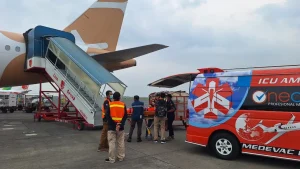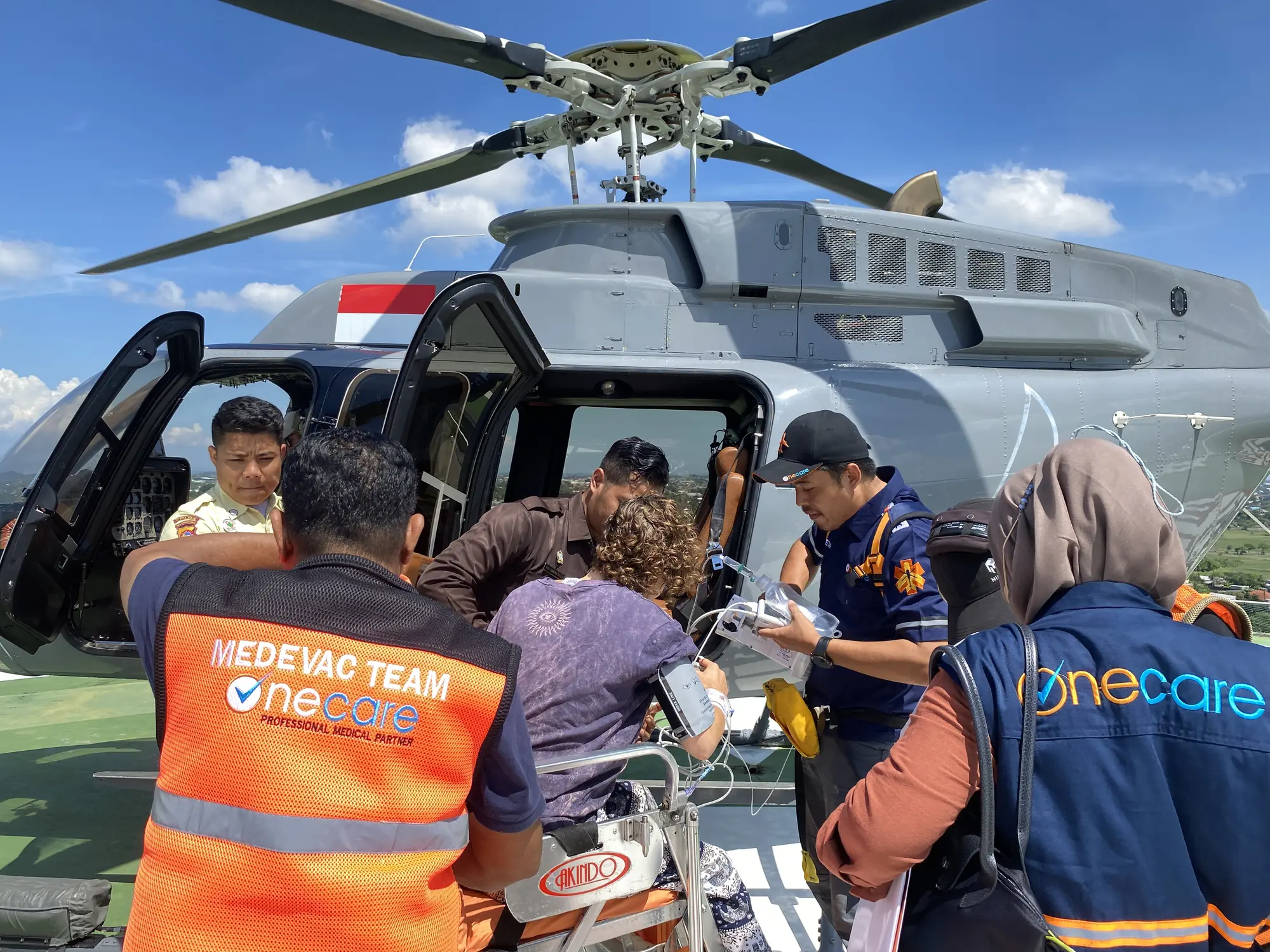
Coordinating an emergency response across Indonesia’s archipelago involves more moving parts than most people expect. Air Ambulance Indonesia services play a central role in this coordination. They connect patients in remote or high-risk locations with the hospital care they need. Whether the journey crosses water, mountains, or hundreds of kilometers of open ocean.
This guide explains how air ambulance works in Indonesia. It follows the process from the initial report to the patient’s handover at a receiving hospital. It also covers the scenarios most relevant to air ambulance for tourists, expatriates, and corporate or offshore teams. Understanding air ambulance coordination is easier when you look at the process from end to end. This includes medical assessment, transport planning, hospital coordination, and patient handover.
What Is Air Ambulance?
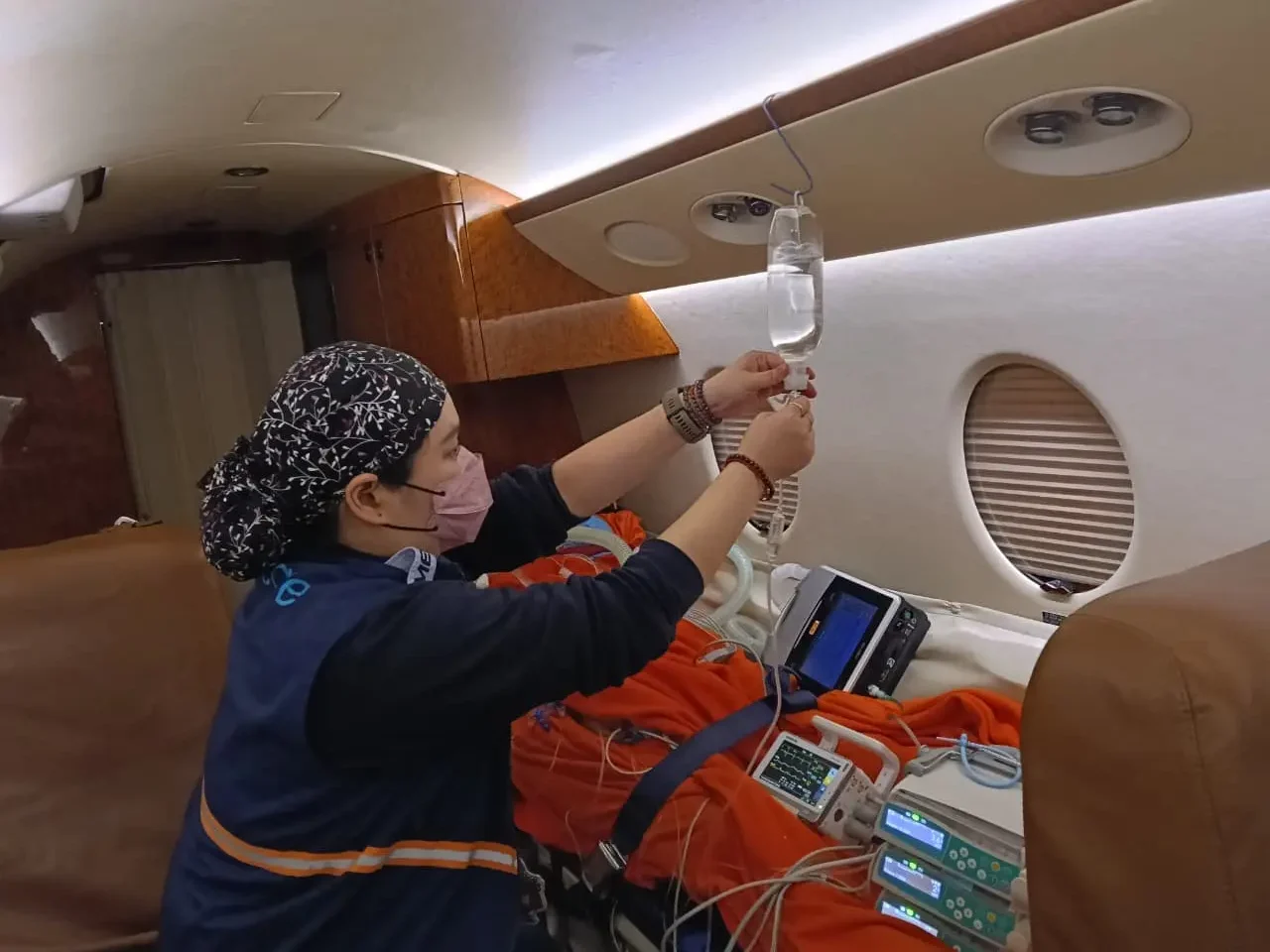
Air ambulance refers to aeromedical transport for patients who need urgent medical care. It may use fixed-wing aircraft or helicopters when ground transport is too slow or impractical.
Air ambulances operate with trained medical personnel and equipment suited to the patient’s condition. Their goal is to keep the patient stable during transit rather than provide full hospital-level treatment in flight. This distinction matters to insurance managers and assistance coordinators. It affects how a case is assessed, staffed, and communicated to the receiving hospital.
How Air Ambulance Indonesia Works
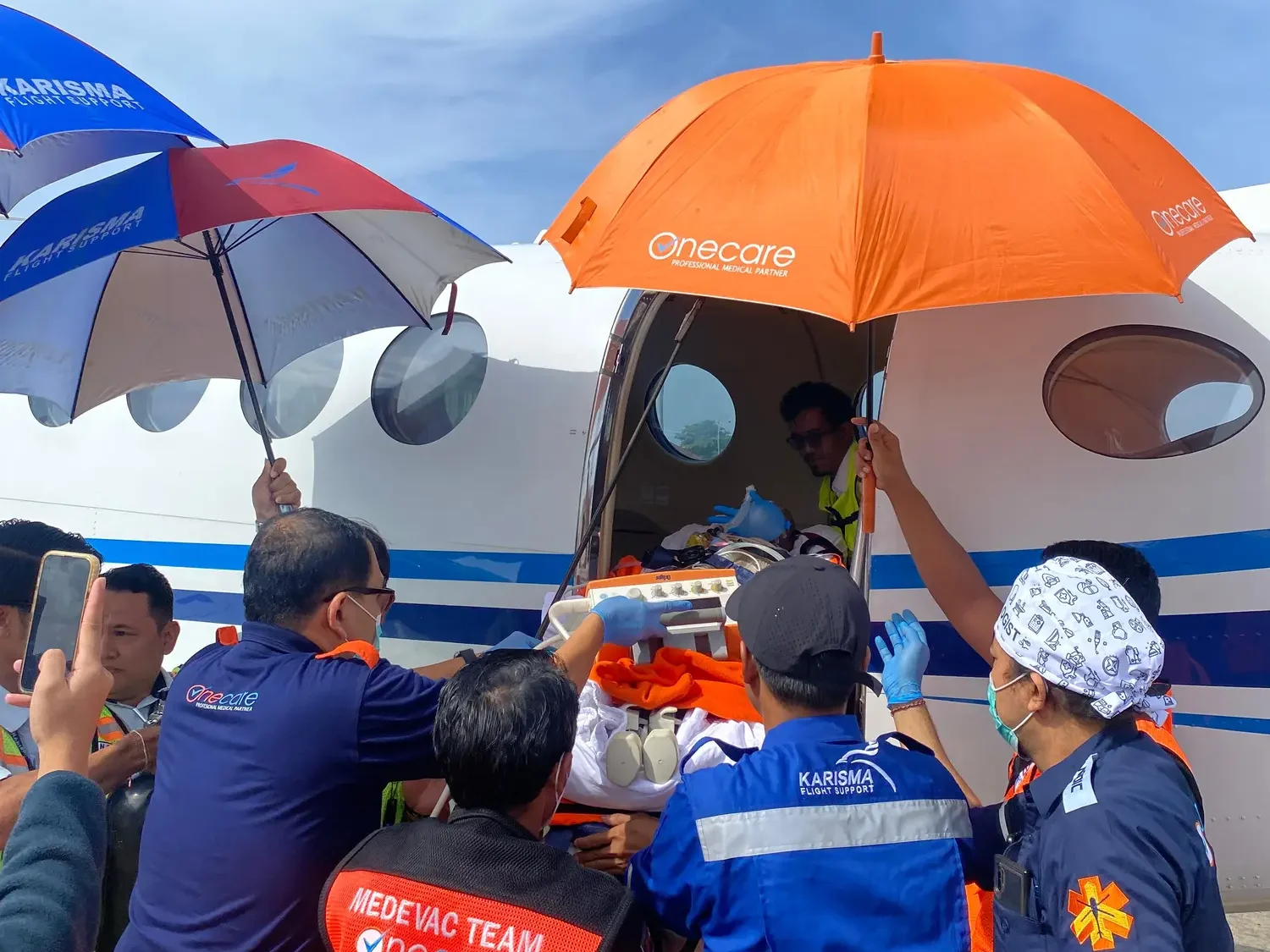
An Air Ambulance Indonesia activation typically begins with a report from an insurer, a travel assistance company, a corporate safety team, or sometimes a hospital or remote-site medic acting directly on a patient’s behalf. From that first call, a defined sequence of coordination steps follows, even though the details vary case by case.
Medical teams first assess the patient’s condition and evacuation urgency. They usually assess information that the treating physician or on-site medic provides. This assessment determines the appropriate transport option. The case may require immediate air transport, a scheduled medical evacuation, or a lower-acuity alternative.
Once the team confirms the urgency, the coordination center arranges aircraft and ground transport simultaneously. At the same time, the team confirms flight clearances and hospital receiving arrangements. This helps prevent delays between each stage of the journey.
Flight clearances, airport slots, and hospital bed confirmation typically happen in parallel with medical preparation, since Indonesia’s island geography means a flight plan can involve multiple legs, weather considerations, or limited airstrip access depending on the origin. Emergency air transport across an archipelago of more than 17,000 islands is rarely a single point-to-point flight. The process ends with a formal patient handover at the destination hospital, including a full medical briefing so continuity of care isn’t interrupted. Understanding how air ambulance works at each step is what ultimately shortens the time between alert and arrival.
The Roles Involved in Every Operation
Every air ambulance operation in Indonesia involves several parties working toward the same outcome. Knowing who is responsible for each step helps explain why some cases move faster than others. It also clarifies where decisions are made during the evacuation. The core roles typically include:
- Attending physician or remote-site medic: Initiates the evacuation request based on clinical condition.
- Assistance company or insurer: Authorizes the case and coordinates directly with the operational provider.
- Air ambulance medical crew: A physician, paramedic, or flight nurse responsible for in-flight patient care.
- Ground ambulance teams: Manage transport at both origin and destination.
- Receiving hospital: Confirms bed availability and prepares to continue treatment.
- Coordination center: Manages logistics across all parties from first call to handover.
Insurance companies and travel assistance providers typically sit at the center of this chain in most Air Ambulance Indonesia cases, authorizing and monitoring the case while the coordination center manages operational details.
Emergency Air Transport Options
Air Ambulance Indonesia is only one option for emergency patient transport. Understanding when each option applies is equally important. The distinction between air ambulance vs medical escort is one of the most common questions insurers ask when scoping a case. Indonesia’s inter-island distances can make transport challenging. Remote airports and offshore locations add further complexity. As a result, the right transport option depends on both geography and clinical need.
Six primary transport options for air ambulance in Indonesia are typically available:
- Dedicated air ambulance (fixed-wing): Best for critical or unstable patients needing continuous medical care over long inter-island distances.
- Helicopter medical evacuation: Suited to shorter distances or remote terrain without a usable airstrip, though range and weather are limiting factors.
- Medical escort on commercial flights: Appropriate for stable patients who need clinical supervision on a scheduled commercial route.
- Commercial stretcher service: Used for stable patients who cannot sit upright, requiring airline coordination rather than a dedicated aircraft.
- Ground ambulance: Practical for shorter, same-island transfers where road infrastructure is reliable.
- Sea and maritime transport: Often necessary for offshore platforms or island locations where air access is limited.
Comparing these options against distance, terrain, and offshore exposure is more useful than treating air ambulance as a default choice. The question of air ambulance vs medical escort typically comes down to patient stability: air ambulance for higher-acuity cases, medical escort for stable patients needing supervision during travel.
Air Ambulance in Indonesia for Tourists, Expats, and Offshore Teams
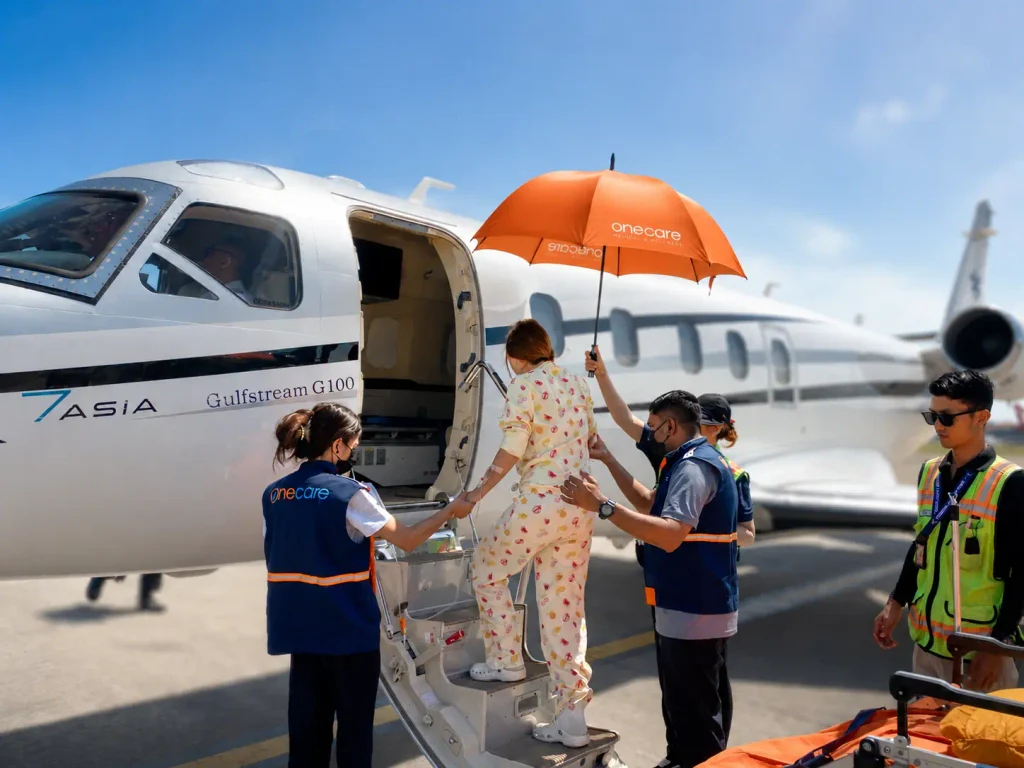
For tourists, medical evacuation is usually arranged through travel insurance rather than paid for directly. If a tourist needs hospital care in Bali, Lombok, or a remote destination, the travel assistance provider is often the first point of contact. The provider can coordinate hospital admission, medical assessment, and onward transport. Air ambulance may become necessary when local hospital capabilities are not sufficient for the patient’s condition. The patient may need transfer to a larger facility or repatriation home.
For expatriates, medical evacuation benefits are frequently tied to corporate health coverage rather than a standalone travel policy. This means the activation process often runs through an employer’s insurance plan or a corporate assistance program, with eligibility and coverage terms set well before any emergency occurs.
Corporate and offshore teams face a different set of considerations. Remote-site and maritime medical evacuation needs are common on oil and gas platforms, mining sites, and vessels operating in Indonesian waters, where the nearest hospital may be hours away by any transport mode. Air Ambulance Indonesia coordination adapts differently for these teams than for individual travelers, since sea-to-air or ground-to-air handoffs add a layer of logistics a standard evacuation doesn’t require.
Why Local Coordination Defines The Successfulness
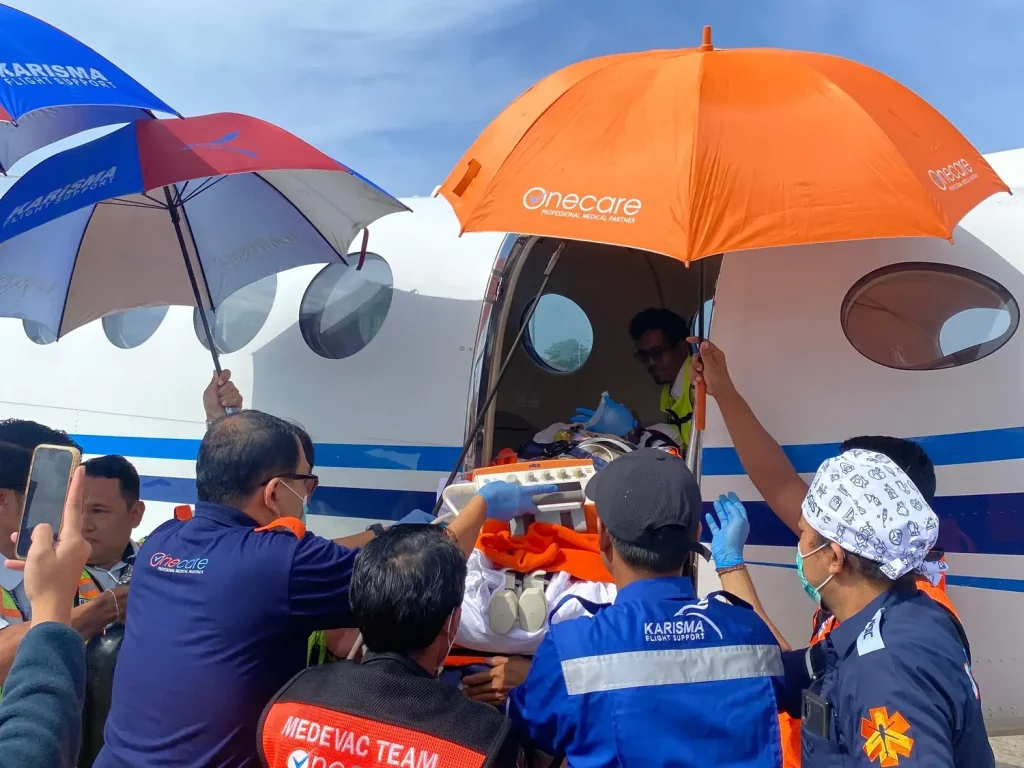
Indonesia spans more than 17,000 islands. Airport infrastructure varies significantly between regions. Specialist hospital access can also be limited outside major cities. The terrain ranges from dense jungle and mountains to open sea. These factors make a one-size-fits-all evacuation plan impractical.
This is why local operational presence matters. Coordination expertise can be just as important as the aircraft itself. These factors are central to effective Air Ambulance Indonesia operations. The scope of air ambulance in Indonesia is outlined in full detail for coordinators and assistance providers.
A locally embedded medical assistance provider differs from an internationally dispatched service in several practical ways: faster response given existing ground presence, established relationships within the local hospital network, familiarity with regional regulatory requirements, more reliable ground transport arrangements, and the ability to adapt a plan dynamically as conditions change mid-case.
How to Partner With a Reliable Air Ambulance Provider in Indonesia
Air ambulance in Indonesia works best when organizations establish a partnership well ahead of any emergency. Insurance managers, procurement teams, assistance providers, and corporate safety teams should evaluate providers before an emergency occurs. Choosing a partner during an active crisis leaves little room for assessment.
A handful of criteria consistently separate reliable providers from the rest: 24/7 operational availability, genuine geographic coverage across the archipelago rather than a handful of major cities, combined land-air-maritime evacuation capability, demonstrated experience supporting insurance and assistance companies, and coordination infrastructure that can manage a case from first call to hospital handover without gaps.
Pre-establishing this kind of partnership means a plan is already in place. The partnership identifies hospital networks, confirms coordination contacts, and establishes response protocols well before any case begins. Onecare Partner works with organizations across these criteria as a structured, professional medical evacuation coordination partner across Indonesia. Get in touch with the Onecare Partner team to explore coordination arrangements.