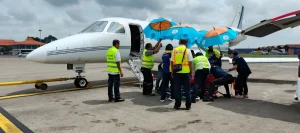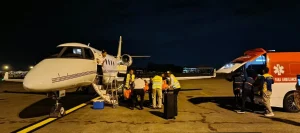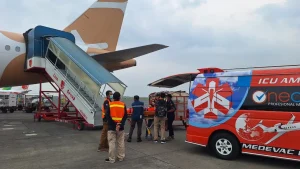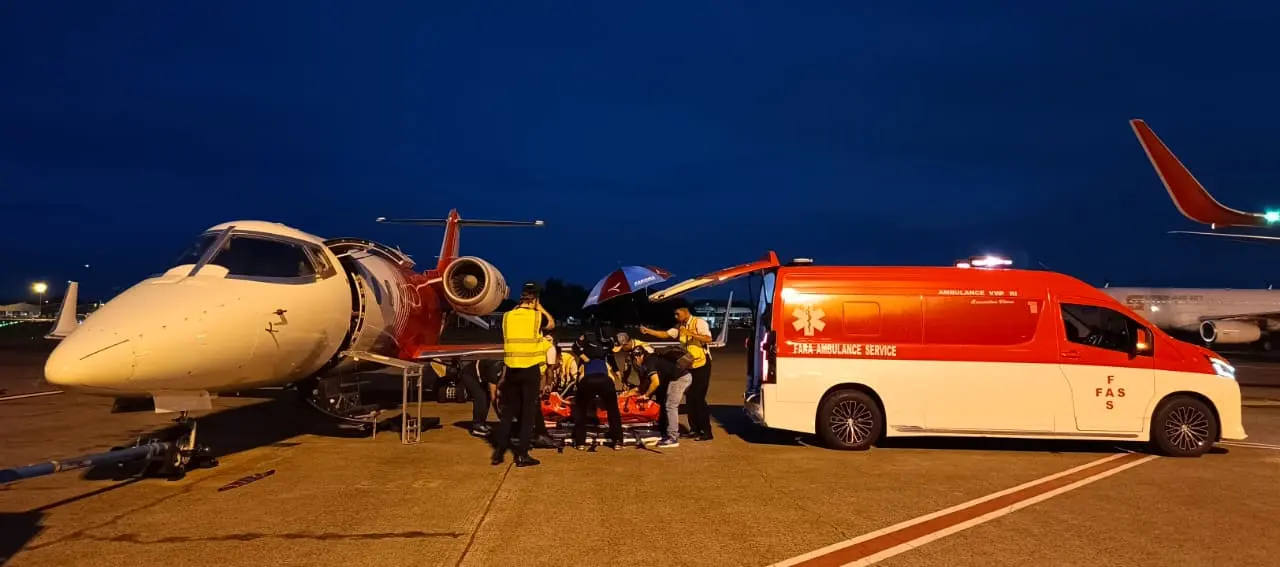
In the realm of emergency medical services, air ambulance case studies highlight the critical role of timely medical transport. These real-life evacuation scenarios demonstrate how effective air ambulance operations can significantly improve patient outcomes, particularly in life-threatening situations. This article aims to provide detailed insights into successful air evacuations, showcasing patient recovery stories that underline the importance of rapid medical response.
Understanding Air Ambulance Services in Indonesia
Indonesia, with its vast archipelago, presents unique challenges for medical transport. The air ambulance services in the country are designed to bridge the gap between remote locations and urban medical facilities. This is crucial for patients requiring urgent care, particularly in cases of severe trauma or medical emergencies. The efficiency of these services can often be a matter of life and death.
Air ambulance Indonesia offers various services, including:
- Emergency medical evacuations for critical patients.
- Non-emergency medical transport for patients needing specialized care.
- Inter-facility transfers for patients requiring advanced medical treatment.
Showcasing Successful Medical Evacuations
One of the most compelling aspects of air ambulance operations is the successful evacuations that occur daily across the nation. Each case is unique, but they all share a common theme, the rapid response of medical teams can lead to improved patient recovery. Here, we delve into a few notable case studies that exemplify this.
Case 1: When terrain rules out the road
A fractured pelvis on a bushland track, Victoria, Australia. A dirt bike rider fell at the top of a steep 4WD track and fractured his pelvis and ribs. Moving him was agonising, which made a full assessment difficult. Road paramedics reached him with help from his friends’ vehicles and gave pain relief while a helicopter was on its way. Once the flight paramedic arrived, he added further pain relief, fitted a pelvic splint and bandaged the rider’s legs together in a more comfortable position. The rider was then winched aboard in a specialised stretcher and flown to The Alfred in Melbourne. He is now recovering at home. The case is also a reminder that these rescues work as a relay between ground and air crews.
A broken leg and a five-hour carry, Enfield State Park, Victoria. A man in his 40s hit a tree on steep ground and fractured his lower leg. Getting him out on foot would have taken more than five hours. A helicopter was airborne from Essendon within minutes, and a flight paramedic was winched down with a stretcher to stabilise him. The final lift of patient and paramedic had to clear tree trunks and branches with very little room to spare. He was flown to a nearby airfield and continued by road ambulance to Ballarat Base Hospital. Police, SES and Fire Rescue Victoria supported the operation. An injury that sounds modest on paper can still be a serious problem when hours of carrying stand between the patient and a hospital.
Case 2: When the first hours decide the outcome
A motocross crash in County Antrim, Northern Ireland. After a crash in May 2023, a rider had a neck broken in four places, a brain injury and damage to his liver and bowel. He spent 36 days in a coma. The air ambulance’s medical team treated him and transported him to the Royal Victoria Hospital, and he says he would not be alive without that response. Less than a year later he walked 12 miles to raise £1,155 for the service.
A car collision north of Perth, Western Australia. A driver suffered severe injuries to his legs, feet, face and ribs. A doctor who happened to arrive at the scene stopped his lung from collapsing, and a rescue helicopter then flew him to Royal Perth Hospital. He was kept in an induced coma until 14 February. He was the first patient carried by the newly launched Bunbury-based RAC Rescue Helicopter, and he later met his rescuers again. One of the crew called his survival a miracle.
What these cases have in common
The cases above are emergency helicopter responses at the scene of an accident. Medical evacuation between hospitals, or across borders, is a different operation, but the same three questions decide whether it succeeds.
- Access. Can a crew reach the patient, or move the patient, faster than any other option?
- Care in transit. Does the level of medical care travelling with the patient match what the patient needs?
- Destination. Is the receiving hospital the right one for this injury?
For insurers and assistance providers, these are the points worth checking in any air evacuation case. You can also read how One Care Air Ambulance approaches medical transport.
When you need to act
If you or someone you are responsible for may need air transport, speed of contact matters as much as speed of flight.
Our 24/7 call center is the fastest way to reach the team, and more about the company is on the Air Ambulance Indonesia Service.