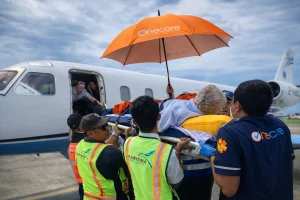
When a patient cannot sit upright for hours but does not need a full air ambulance, a commercial stretcher flight Indonesia families can arrange through a medical team is often the practical middle ground. The patient travels lying down on a scheduled airline, with a stretcher fitted over a block of seats and a medical escort at the bedside throughout the journey.
This guide explains how the process works, how a stretcher case differs from a seated patient, and what the escort team actually does. It is written for patients and families who want to understand the steps, approvals, and trade-offs before making a decision.
How Commercial Stretcher Flight Indonesia Works
A stretcher flight on a regular airline follows the airline’s own rules, which means the booking, the aircraft, and the medical paperwork all have to line up before departure. Each step involves the airline, the treating hospital, and the medical escort team working from the same accurate information.
Stretcher Setup on Scheduled Flights
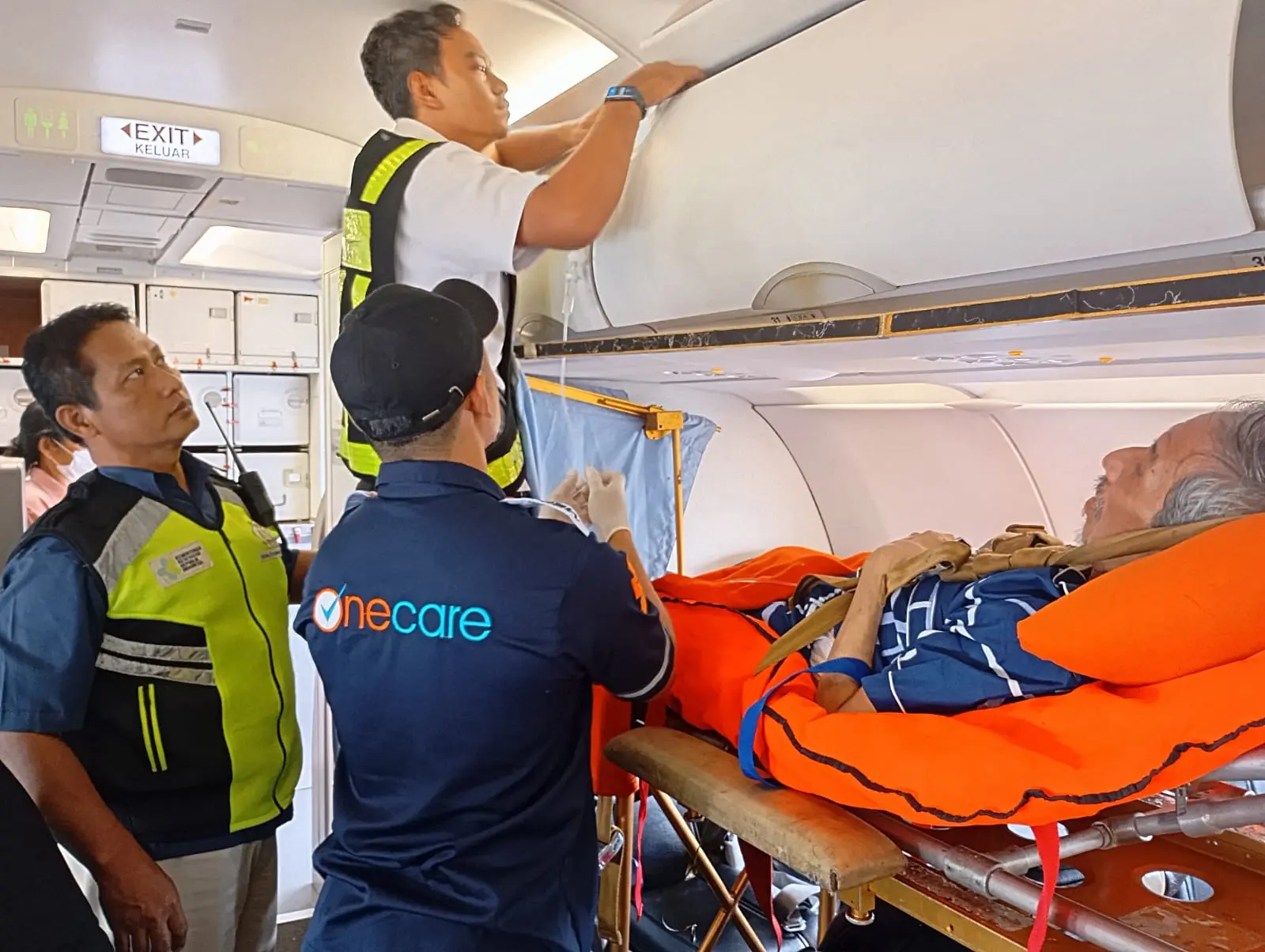
Airlines that accept stretcher passengers typically install a stretcher kit over several seats in the economy cabin, and the patient is secured with harnesses for take-off, landing, and turbulence. Because this setup takes preparation, the booking is made well ahead of the travel date and only on aircraft and routes that support it.
Airline Medical Clearance Explained
Before a patient is accepted, the airline’s medical department reviews the diagnosis, stability, and care needs to confirm the person is fit to fly. This airline medical clearance protects both the patient and the other passengers, and the airline always has the final say on whether a stretcher case can be carried.
Understanding MEDIF Approval
MEDIF stands for Medical Information Form, a document the treating doctor completes with the patient’s condition, mobility, oxygen needs, and expected care during the flight. Airlines use this MEDIF approval process to decide whether to accept the patient and under what conditions, so complete and accurate information helps avoid last-minute delays.
Sitting Up or Lying Down in Flight
The difference comes down to whether a patient can safely sit upright for the full journey, including taxi, take-off, landing, and any connections along the way. A seated patient with medical needs may travel in a regular seat with an escort, while a stretcher case must lie flat and needs a dedicated setup on board.
Doctors usually make this call based on mobility, pain levels, breathing, and the risk of complications during the trip:
- Seated patient: able to sit upright for the whole flight, may need oxygen, assistance with movement, or a medical escort nearby.
- Stretcher case: unable to sit upright, often due to fractures, spinal injuries, recent surgery, or severe weakness, and must remain lying flat from departure to arrival.
When the right category is unclear, the treating doctor’s assessment is the starting point, and the airline’s medical team will confirm it before the booking is finalized.
Who Looks After You in the Air
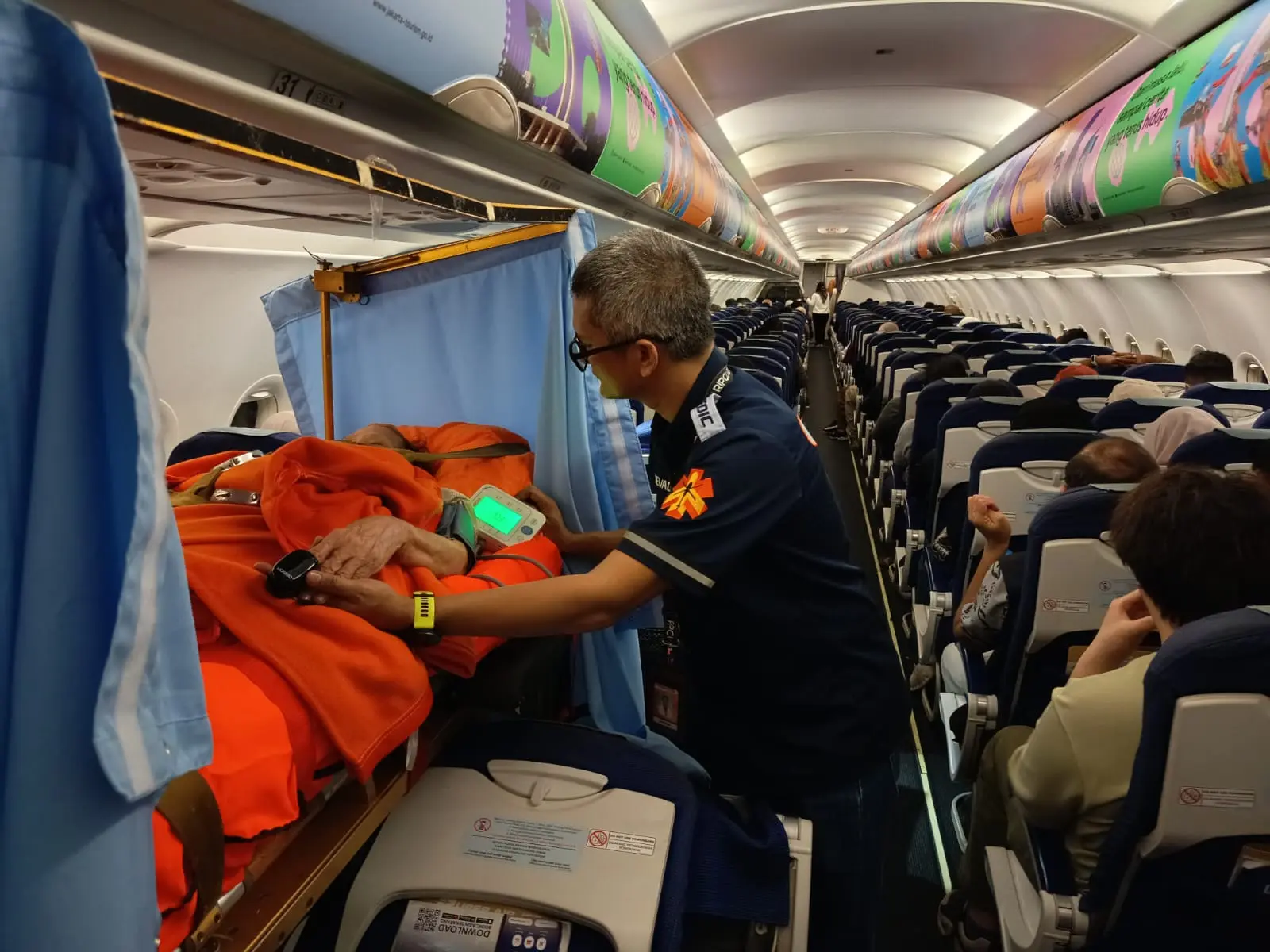
A medical escort is what makes a stretcher flight on a scheduled airline safe, since cabin crew are not trained or permitted to provide ongoing medical care. The escort team stays with the patient from pickup to handover and adjusts the plan if the patient’s condition changes along the way.
Doctor and Flight Nurse Escort
Depending on the case, the team usually includes a doctor, a flight nurse, or both, who monitor vital signs, give medication, and manage oxygen and other portable equipment during the flight. A medical escort on a commercial flight keeps every clinical decision in qualified hands, from the first pickup to the final bedside handover.
Coordination Before and After Landing
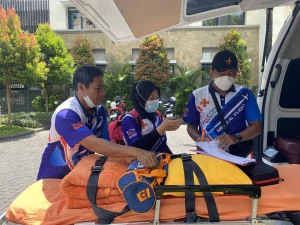
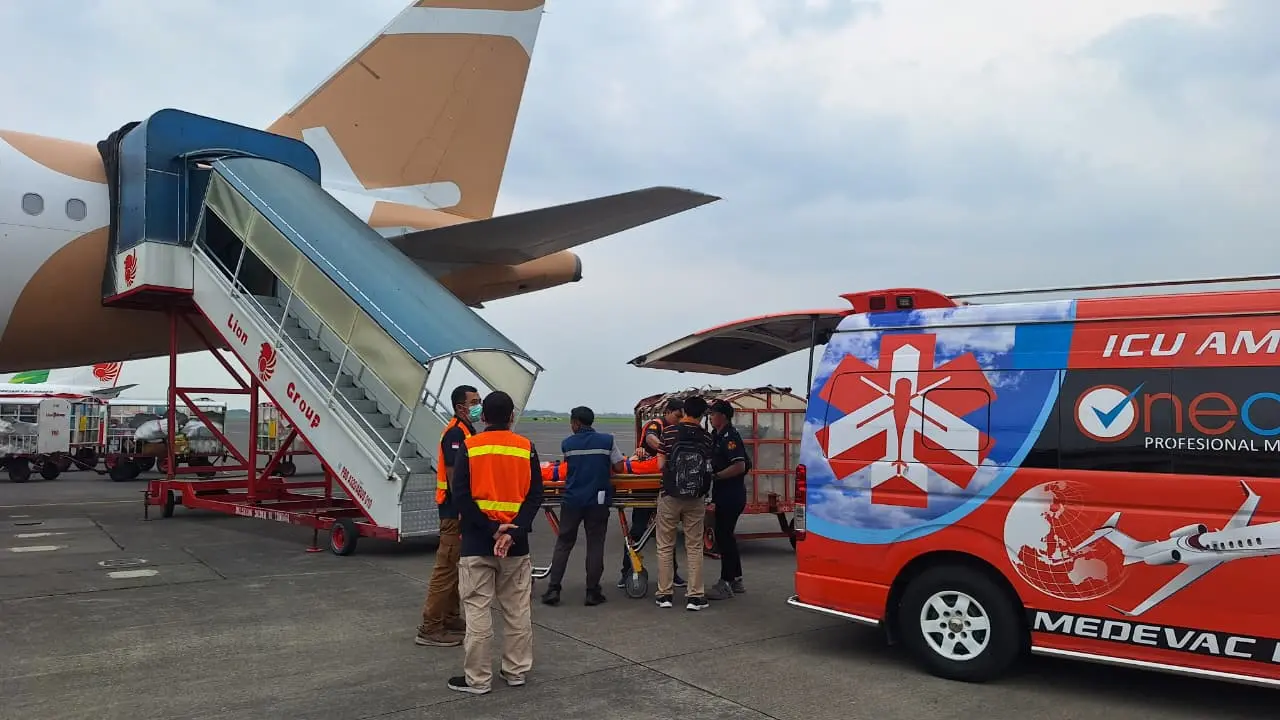
The escort team also handles the parts families often find hardest to manage, including hospital handover, ground ambulance transfers, airport assistance, and communication with the receiving facility. Because each handover is planned in advance, the patient does not end up waiting without care at any stage of the journey.
Commercial Stretcher Flight Indonesia vs Charter
A charter air ambulance gives full control over timing and onboard equipment, but it is priced as a dedicated aircraft for one patient. For stable patients who do not need intensive care, a commercial stretcher option is often a more economical choice, and it is the service One Care offers as a lower-cost alternative to charter.
It does come with trade-offs, since departure times follow airline schedules and the airline can decline a patient who is not stable enough to fly. A medical team can help weigh the two options based on the patient’s condition and urgency:
- Commercial stretcher often suits: stable patients, flexible travel dates, and cases that do not require intensive care during the flight.
- Charter often suits: critically ill patients, urgent departures, and cases that need advanced equipment or an immediate flight.
Ready to Plan the Journey?
Arranging a commercial stretcher flight Indonesia patients can rely on involves much more than booking a seat, because medical evacuation is not simply about moving a patient from one place to another. It is about making sure every stage of the journey is coordinated, so the patient receives the right care until arriving safely at the destination facility.
If you are considering this option, our team can review the patient’s condition, advise on airline requirements, and prepare the MEDIF and escort plan with you. Reach out through any of the channels below to discuss the case.
- WhatsApp: https://wa.me/6281260505505
- Alamat One Care Bali: Jl. Sedap Malam No.110A, Kesiman, Kec. Denpasar Tim., Kota Denpasar, Bali 80237
- Email: emergency@onecarepartner.com
Every patient’s situation is different, so the best choice always starts with an honest look at medical needs, timing, and budget. With clear information and an experienced team beside you, families can face a long journey with far more confidence and far less uncertainty.