Arranging a medical transfer Batam to Singapore is often the first practical question families ask once a doctor recommends treatment abroad, and the answer is not always a chartered aircraft. For many stable patients, a ferry crossing with a trained medical escort offers a more affordable and well-supervised alternative that keeps care continuous from the bedside to the receiving hospital.
Ferry Medic is designed for exactly this situation: patients in Batam and across the Riau Islands who need to reach a Singapore hospital without the cost of a dedicated flight. This article explains why so many patients make the journey, how the service works step by step, and how it compares with air transport so you can judge which option fits your situation.
Why Patients Cross the Strait
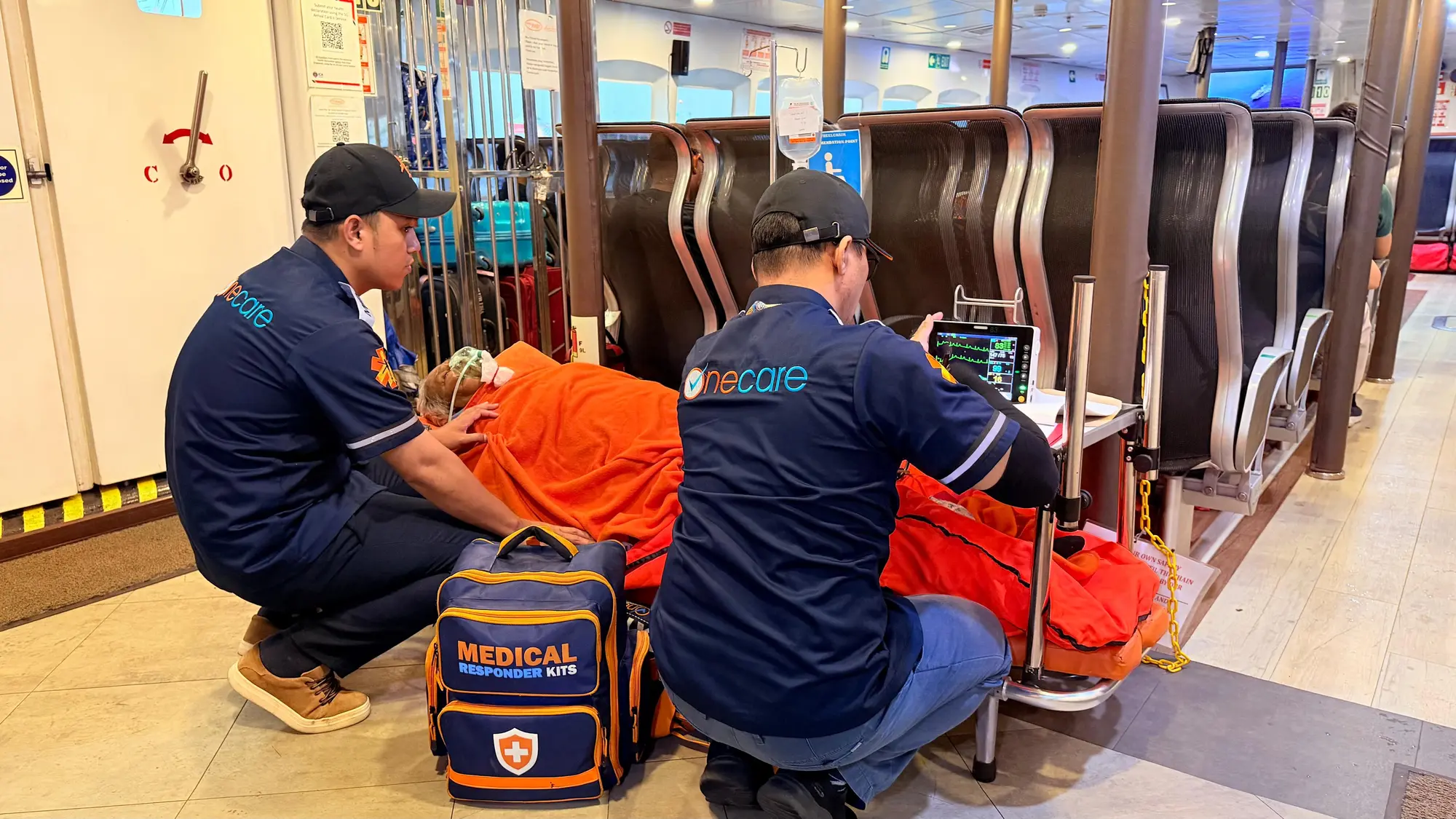
Batam sits only a short sea crossing from Singapore, which makes the city a natural gateway for people looking for advanced care. Many families already travel between the two places regularly, so seeking treatment abroad from Batam often feels like a practical next step rather than a distant one.
Access to Specialist Care
Singapore’s hospitals are well known for specialist departments in areas such as cardiology, oncology, and neurology, supported by advanced diagnostic equipment. When a case calls for a second opinion or a procedure that is not available locally, patients and their doctors tend to look across the strait first.
A Short and Familiar Route
The ferry link between Batam and Singapore is frequent and well established, which makes travel predictable and easy for relatives to plan around. That convenience matters when a patient needs to reach a hospital promptly but is not in a condition that requires an aircraft.
Cost Pressure on Families
Hospital bills abroad already place a heavy load on families, so transport costs quickly become a serious concern. A sea transfer with a medical escort keeps the journey supervised while leaving more of the budget available for the treatment itself.
Medical Transfer Batam to Singapore by Sea
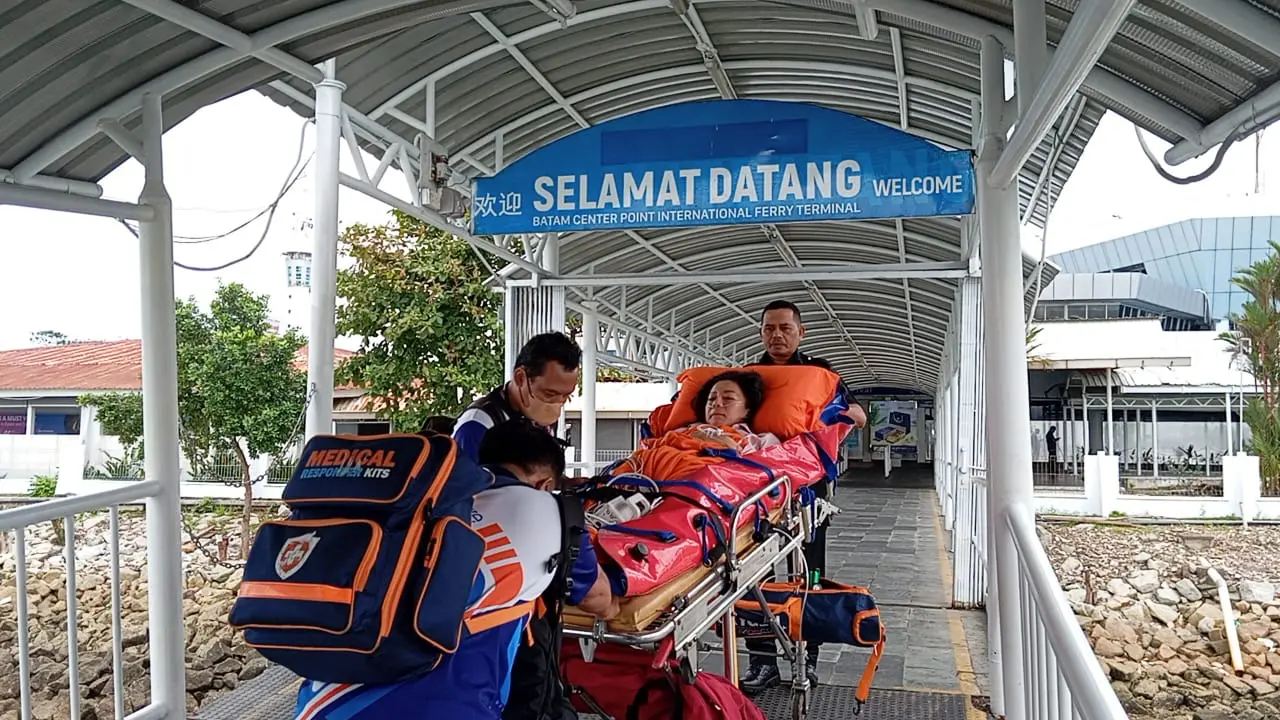
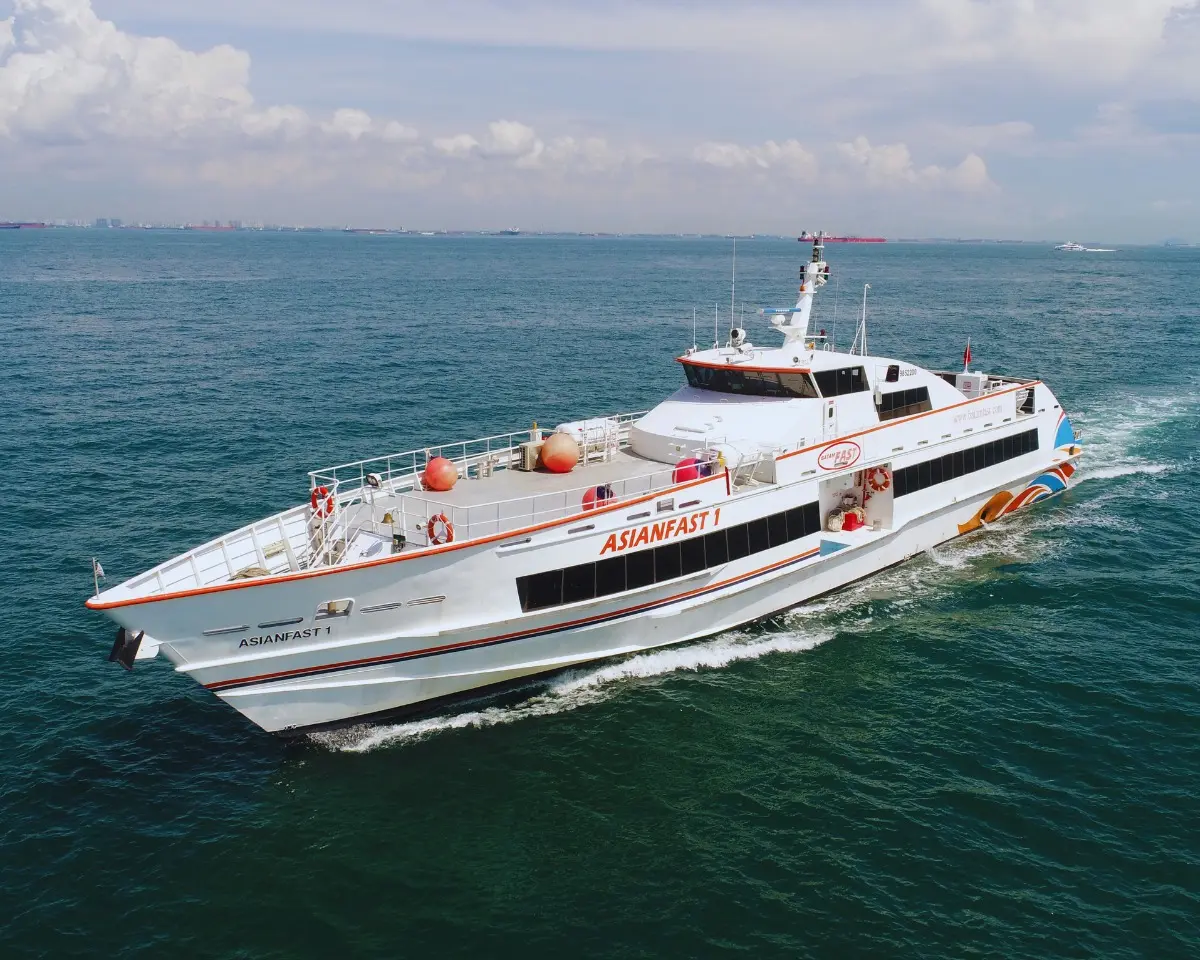
Ferry Medic combines a scheduled ferry crossing with a medical escort who stays with the patient from departure until handover. The service is arranged by One Care, which coordinates the medical, logistical, and administrative pieces so that families do not have to manage them alone.
Assessment Before Departure
The process begins with a review of the patient’s diagnosis, mobility, and treatment needs to confirm that a sea crossing is safe. Medical records and the receiving hospital’s details are collected at this stage, which also helps the team prepare the right equipment and supplies for the trip.
Care During the Crossing
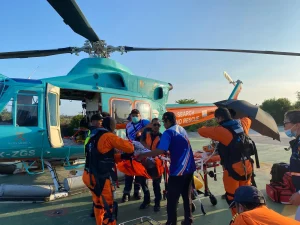
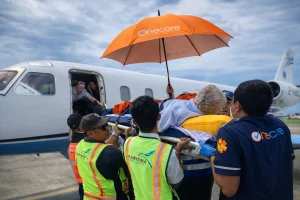
A medic accompanies the patient throughout the journey, monitoring their condition, managing medication, and responding to any changes along the way. This pre-hospital transfer approach keeps clinical supervision in place while the ferry covers the distance.
Handover at the Hospital
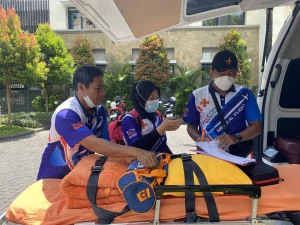
On arrival, ground transport carries the patient from the terminal to the hospital, and the medic hands over to the receiving team with a clear clinical summary. A coordinated handover helps prevent gaps in care at the very moment they are most likely to happen.
Sea or Air: Medical Transfer Batam to Singapore
Both options can work well, but they suit different patients, and the right choice depends on clinical stability, urgency, and budget. The comparison below summarizes how the two differ in practice so families can discuss them with their doctor.
- Cost: A ferry-based transfer is generally more affordable because it avoids aircraft charter, crew, and handling costs, which makes it an affordable medical transport option for many families.
- Patient condition: Ferry Medic suits stable patients who can tolerate a sea crossing, while critical patients who need intensive monitoring or ventilation usually require an air ambulance.
- Speed: Air transport is faster door to door for urgent cases, whereas the ferry crossing takes longer but follows a short and predictable route.
- Scheduling: Ferry transfers follow scheduled sailings, while a charter flight can be arranged around the patient’s timing once permits and slots are cleared.
- Level of care: An air ambulance offers ICU-level equipment on board, while Ferry Medic provides skilled escort-level care suited to stable patients.
Who Ferry Medic Suits Best
Ferry Medic is most useful for patients who are medically stable but still need professional supervision during the journey. Every case is assessed first, and if the team believes a patient needs a higher level of care, they will advise an air option instead.
- Patients scheduled for planned surgery, chemotherapy, or follow-up treatment in Singapore
- Patients discharged from a Batam hospital who need continued care at a hospital abroad
- Elderly or mobility-limited patients who cannot travel safely on their own
- Families across the Riau Islands, where sea medical evacuation is often the most practical route
- Cases where a low-cost medical transfer between Singapore and Malaysia is needed and the route and condition allow it
Plan Your Transfer with One Care
A well-run medical transfer Batam to Singapore is about much more than moving a patient from one dock to another. Medical evacuation means coordinating every stage of the journey, from clinical assessment and escort to ground transport and handover, so that the patient receives the right care until they arrive at the destination facility.
Reach out to our team to discuss the patient’s condition, timing, and destination hospital:
- WhatsApp: https://wa.me/6281260505505
- Alamat One Care Bali: Jl. Sedap Malam No.110A, Kesiman, Kec. Denpasar Tim., Kota Denpasar, Bali 80237
- Email: emergency@onecarepartner.com
Every patient’s situation is different, so a short conversation about the diagnosis, timing, and receiving hospital is the best way to find the safest and most practical route. Whether the answer turns out to be a ferry, a commercial flight, or a dedicated air ambulance, the goal stays the same: a calm, well-coordinated journey from start to finish.